Simon woke slowly.
He was lying on something soft. Hunger gnawed at his empty stomach, and his mouth was dry, but other than those mild discomforts he wasn’t in pain. His eyelids were heavy and gummed shut; he managed to pry them open.
There was barely any light to see by, but Simon could see bronze, segmented struts arching overhead, like the ones aboard the leviathan—
He lurched upright. Something was tangled around him; he shoved it aside and fell, hitting a familiar metal floor.
“No, no, no …”
There was something wrong with his left arm. He couldn’t seem to move it; couldn’t get it under him to push up off the floor.
It was all a lie. Something he’d hallucinated, in the depths of heat delirium. There was never any Grace. He hadn’t escaped.
He was still on the leviathan. He was going to die.
There was movement in the dark; a door swivelled open, and a silhouette appeared in the light coming through the other side. “Simon?” called a voice—Grace’s voice.
“No,” Simon rasped. “No, you’re not real. You’re not.” A sob tore his way up his throat. “I really wanted you to be real.”
Light flooded the room—sudden, bright, blinding. Simon squeezed his eyes shut, feeling tears leak from the corners. His chest felt too small to contain his pounding heart. He couldn’t breathe.
“It’s okay,” came Grace’s voice, closer now, fast and worried. “Simon, it’s okay. You’re safe.”
Simon shook his head. “I’m still on the leviathan.”
“What? No, it’s—it’s a different leviathan. Her name’s Mari.”
“Stop it,” Simon begged. “Stop it, I can’t …”
He heard Grace take a breath and let it out. When he spoke again, his voice was calm and gentle—like it had been before, when he was with Simon in the command. “Simon, can you open your eyes for me?”
Despite Simon’s best efforts, his eyes fluttered open.
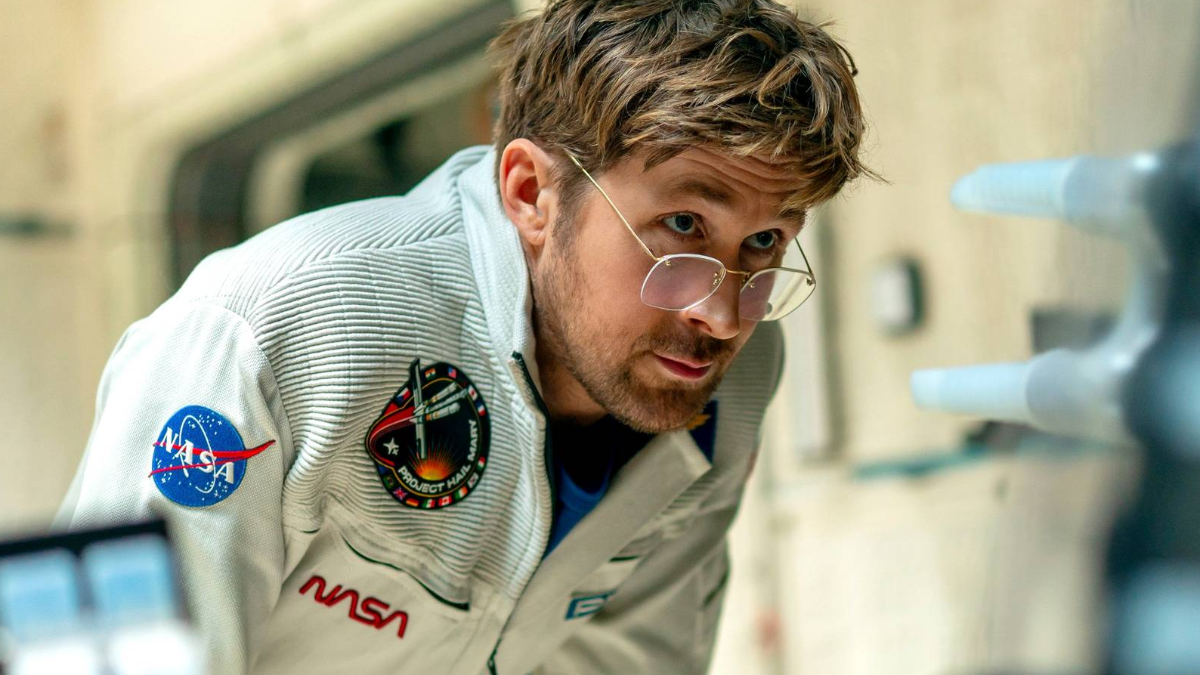
The last time Simon had seen Grace, his face had been hidden behind the visor of his suit and Simon could barely see past the helmet lamp shining in his eyes. Now the suit was gone; Grace was wearing only a short-sleeved shirt—with writing on it, for some reason—and pants made of some rough, hardy blue material. He had ruffled hair and kind eyes and a pair of eyeglasses hanging precariously from one ear.
He looked so soft.
“Good,” Grace said, smiling a little. “That’s good, Simon. Now, can you look at your left arm?”
Simon’s eyes fell to his side. His arm ended halfway to where his elbow should’ve been; clean, white bandages were wrapped around the stump.
He remembered Grace cutting it off. At first, it hadn’t hurt at all; he’d only registered the impact of each blow, like being punched in the arm. The pain only set in once they were stumbling into the hangar, onto the transport pod.
The pod they’d left in. Simon had been losing blood fast, everything hazy around the edges, but he’d seen open space through the viewport.
“It was real,” he said, barely more than an exhale.
There was a complicated grief in Grace’s eyes. “Yeah,” he said softly. “It was real.”
Simon reached for Grace with his remaining arm. His chest was solid, warm through the thin material of his shirt, rising and falling slightly as he breathed.
He was real, too.
Simon’s fingers clenched around a fistful of Grace’s shirt as a sob of sheer, agonising relief wracked his body.
Once he’d talked Simon down from his panic attack, Grace figured the next priority on the list was to get some food into him.
He led the way through Mari’s corridors to the central chamber. Simon was a little unsteady—he was still weak, and the loss of his arm had affected his balance—but otherwise he seemed okay. He was still wearing the medical gown the nannybot had put him in after cutting off his clothes; changing him while he was unconscious felt … weird, so Grace decided not to. He’d thoroughly sterilised what was left of Simon’s old clothes before leaving them in Mari’s sluice room to soak in her amnexus fluids.
Even if that managed to get the stains out, they wouldn’t exactly be wearable. There were probably some leftover Peacekeeper clothes in the cargo bay, but digging around in there meant leaving Simon alone for a while. And Simon didn’t seem up to that.
Grace guided him to sit at the central chamber’s long dining table, then began to dig through the storage cupboards. He pulled out a package of food cubes; near as he could tell, they were the basic ration around here. Wherever “here” was.
“We have plenty of actual food,” he explained, setting the food cubes in front of Simon, “but the medication we gave you probably messed up your gut flora, so we’ll stick with food cubes until your digestive system recovers.”
Simon didn’t complain—in fact, he didn’t say a word as he ripped the package open. He ate fast, hunched protectively over the food. When Grace turned back to close the cupboards, he caught a glimpse of Simon sneaking a few cubes into the pockets of his gown.
Grace still couldn’t remember his parents’ names, or the face of his best friend when he was a kid, but in that moment all his mandated reporter training surfaced at once. Whatever Simon’s situation had been like before he wound up on that leviathan, it was one where he couldn’t be sure where his next meal was coming from.
Within a few minutes, the last of the food cubes were either eaten or stashed away. Simon’s eyes wandered the room as he sat back; he reached up toward the right side of his chest, fingers closing around nothing. He flinched, then looked down at himself—noticing for the first time what he was wearing.
Anxiety flickered across his face, and he looked up at Grace with a resigned expression. “Are you taking me back to prison?”
Grace blinked. “You were in prison?”
Simon gave him a perplexed look, as if surprised Grace didn’t know that. “This is a Peacekeeper ship, isn’t it?”
“Uh, no,” Grace said. “Well, not anymore.” Then, because it felt like something he should point out, he added, “I’m not even sebacean. I’m a human. We’re … kind of on the run from the Peacekeepers, actually.”
Simon’s brow furrowed. “‘We’?”
Simon followed uncertainly as Grace led him into the lower tiers of the ship, until they reached the maintenance bay. A large section of the room had been walled off using some kind of transparent material, joined together in irregular hexagonal shapes. Sitting inside that contained space was a boulder with legs.
“This is Rocky,” Grace said, by way of introduction.
Simon studied the alien for a moment, then turned to Grace with frank disbelief. “‘Rocky’? Really?”
“Grace give name,” Rocky explained. “Real name is—”
What followed was a long series of musical tones, as Rocky brought its—his?—forelegs together to display the markings etched across two of them.
“‘Rocky’ easier for dumb space blobs,” Rocky concluded. “Is character from Earth movie. I like.”
It seemed as though Rocky’s language was too complex for the translator microbes to parse—hence why he’d simplified his speech down to the simple, almost childlike sentences Simon was hearing. He’d met a few aliens, but he’d never seen or heard anything like this before.
He must’ve been staring too obviously, because Grace eventually volunteered, “Rocky’s an eridian. They kind of just figured out interstellar travel. His ship stumbled into Peacekeeper jurisdiction, and they took him prisoner.”
“Peacekeepers do same to Grace,” Rocky added. “Find ship drifting, Grace asleep. Take prisoner. Make Grace Rocky do science.”
“Until we managed to get Mari’s control collar off,” Grace explained. “We’ve been on our own ever since.”
This part of the maintenance bay looked to be serving as a makeshift lab; it was a mess, printouts and tools scattered everywhere, but had much the same configuration as the lab on the other leviathan. Simon even recognised some of the same equipment. Perhaps this ship had been part of the same project—
“Grace staring at Simon arm.”
Simon’s attention snapped back to Grace, just in time to see Grace looking deliberately away from the stump of his arm.
“Grace ask Rocky to inform when Grace staring at Simon arm,” Rocky said helpfully.
“Yep. Sure did, buddy. Thanks.” Grace’s gaze wandered back to Simon’s face; he looked, strangely, guilty. “I, uh … I’m sorry. For …” he gestured to Simon’s left side.
“You needed to do it,” Simon replied, baffled by the apology. More quietly, and without really thinking about it, he added, “I didn’t want to die there.”
Grace’s expression softened, even as his posture remained stiff and uncomfortable.
Simon cleared his throat; one question had been nagging at him since Grace revealed he wasn’t a Peacekeeper. “Why did you help me?”
Grace’s face fell; he looked almost sad. “Because you asked,” he said, simply.
He made it sound so easy. But if it was that easy, why hadn’t anyone else ever done it? Why had Simon been left to suffer alone, again and again?
Simon wavered a little; he was suddenly so tired. Grace darted forward to steady him, his hands warm where they held Simon’s shoulders.
“Whoa, hey,” Grace was saying, past the fuzzy edges of Simon’s awareness. “Maybe you should sit down or something.”
“I’m fine,” Simon mumbled back. “Tired.”
“Yeah, this was maybe a bit much for your first day up,” Grace said, chastened. “Do you want to go back to your quarters? Lie down for a bit?”
Simon nodded and let Grace guide him back through the corridors to the room he’d woken up in.
As he collapsed into bed, he looked up at Grace and asked, just to be sure, “This is real?”
“Yeah,” Grace promised. “It’s all real.”
Simon sighed in relief and drifted off to sleep.
Arns later, as Simon clawed his way back to consciousness, he found himself once again alone. Grace was gone.
“Hello?” he called out, into the emptiness of the room.
After a moment, a voice said, “Hello, Simon.”
Simon sat up with a jolt and scanned the room. There was nobody else here, and terror grabbed him by the throat for a moment before he spotted the comm unit sitting on a small table next to the bed. He gingerly picked it up. “Who’s this?”
“I am Mari’s pilot,” said the voice over the comm.
“You got a name?”
“You may call me Pilot,” the voice said pleasantly. “Rocky and Dr. Grace are busy in the lab. They have asked to be informed of any changes in your condition, but you are otherwise free to go where you please.”
Simon found that a little hard to believe—but when he climbed out of bed and tried the door, it swivelled open.
His feet were cold. Simon glanced down; he was still in the loose-fitting garment he’d been wearing when he woke up last time, and his feet were bare.
Closing the door again, he surveyed the room. There was a waist-high table along one wall, and atop it sat a messy stack of hastily-folded clothes. Next to it, a few familiar scraps of fabric were piled on the tabletop. They were cleaner than they’d ever been, but still stained—and they’d been neatly sheared into pieces. Probably because Grace, or whoever treated his injuries, had to cut them off him.
Simon dug hastily through the pile until his fingers closed around a rigid shape. He shut his eyes and pulled his hand back, almost afraid to open them again and be proven wrong.
When he finally worked up the courage to look, he found the knife sheath resting in his palm.
Simon’s knees buckled; he slid to the floor, hand wrapped protectively around the sheath as he clutched it to his chest. His breath of gratitude broke into a ragged sob.
He wasn’t sure how long he sat there on the floor, but eventually he managed to calm down and pull himself to his feet.
Simon turned his attention to the other clothes that had been left for him. They looked like Peacekeeper off-duty fatigues: basic pants and a short-sleeved shirt. Getting them on took some figuring out now that he only had the one arm to work with, but in short order he was dressed.
There was no hood or harness to clip the sheath to, so Simon hooked it onto his belt instead as he ventured out into the ship’s corridors.
He’d been a little out of it the last time Grace brought him to the … galley, or whatever it was. After a few twists and turns through the maze that made up the leviathan’s innards, Simon finally accepted that he had no idea where he was going.
There was a whirring noise from up ahead, and a small, yellow, bug-like drone appeared, coming the other way down the corridor. It stopped at his feet, peering up at him with its eye-stalks, and emitted a buzzing chirp that almost seemed like a question.
“Uh …” Simon cleared his throat. “I’m looking for the food.”
With a cheep of acknowledgement, the drone swept past Simon, back the way he’d come. It stopped a few motras down the corridor and rotated to face him again, its little eye-lights watching him expectantly.
Simon took a few steps toward it; the drone emitted a pleased chittering noise and led him onward. It wasn’t long before they arrived in front of a door; as Simon approached, it swivelled open of its own volition.
Grace had said the leviathan’s name was Mari. Could it sense him right now? Or were leviathans no more aware of their crew than Simon was of the things inside his own body?
“Uh … thanks,” he offered, hedging his bets. After a moment, he followed it up with a soft pat to the frame of the door.
The drone chirped and zipped away down the corridor.
Simon tried the cupboards and was surprised to find they opened easily. There were a few boxes of food cubes alongside a multitude of things he didn’t recognise: shiny, vacuum-sealed packages and covered cups made from some fibrous material. And there was a lot of it—maybe more food than he’d ever seen in one place before.
Mari’s supplies were completely unsecured, and yet it—she—had let him in here without question. She’d trusted him not to take everything for himself, or poison it, and that was … stupid.
Simon had heard once that leviathans didn’t have weapons—that they would, in fact, refuse to be fitted with any. Maybe a creature like that had no choice but to trust.
He took a package of food cubes and sat at the table again. The cubes were bland and a little dry, but they satisfied the gnawing hunger in the pit of his stomach. As he disposed of the empty package, there was a noise from somewhere above him—just beyond the range of his hearing. Like someone whispering.
Simon flinched and backed up a few steps, eyes on the ceiling, then spun and checked over his shoulder. There was nobody else here, or in the corridor outside.
He fumbled at his comm. “Pilot? Was that you?”
After a moment, Pilot’s voice replied, “To what are you referring, Simon?”
“… Nothing.” Simon’s fingers drifted to the empty knife sheath at his belt. “It’s—it’s nothing.”
It was rare that Grace and Rocky ended up actually working together on something. Most of the time they were preoccupied with their separate tasks; their fields of expertise didn’t really overlap, and in most cases it was better to work in parallel than risk slowing each other down with explanations or instructions.
So far they hadn’t figured out a design for a computer terminal that would survive in Rocky’s atmosphere, so that left Grace to sift through the data from the other leviathan while Rocky worked on his own project.
“How human elbow joint move?” Rocky asked, breaking the silence of the lab for the first time in about an hour.
Without looking up from the console, Grace held out his arm; he bent and extended his elbow a few times to demonstrate its range of motion.
Rocky made a curious noise. “No rotation?”
“No, that’s mostly in the wrist.”
“How work with arm bones?”
Grace rotated his wrist. “There’s two of them in the lower arm. They twist around each other.”
Rocky hummed contemplatively. “Next time, sever arm below elbow. Less complicated.”
“I’ll try to remember that, pal.”
Grace kept on reading; there was a lot more here than he and Rocky had managed to scrape together on their own. The Peacekeepers had put most of their efforts into testing methods of killing Astrophage, but—consistent with Grace’s findings back on Earth—the little black dots were impervious to just about every energy weapon they’d tried. The only thing that seemed to do the job was direct penetration of the cell membrane, and you couldn’t kill off trillions of cells by individually stabbing each one—although several options along that line had been considered, including nanomachines and genetically-modified organisms. None of them had progressed beyond prototypes.
The research data also included extensive star charts, tracking the progress of Astrophage infection through much of the Peacekeepers’ jurisdiction and some of the Uncharted Territories. Unfortunately, none of those maps offered any hint as to where Earth was from here.
How the heck did he end up so far off-course in just four years?
Heavy bootsteps across the metal floor of the maintenance bay heralded Simon’s arrival. He was looking a little better than he had yesterday; he was also wearing the clothes Grace had left for him.
“Hey, Simon,” Grace called out.
Simon opened his mouth to respond, but he went still as his eyes wandered over Grace’s shoulder.
Rocky’s latest project was laid out across his workbench. It was still in the early stages, but the skeletal frame of the arm and hand were a big hint as to what the final product would look like.
“Uh, right.” Grace gave Simon an apologetic grimace. “I was going to ask if you wanted a prosthetic, but Rocky decided he’d just go ahead and start working on it.”
Simon stared at the half-constructed artificial arm for a long moment, then blinked and looked firmly at the floor, as if he’d just talked himself out of something. “I … I don’t have anything to give you for it.”
There was an awful familiarity to the resignation in his voice. From what Grace could remember, Grover Cleveland Middle had been in a decent school district—but there were still kids there in bad situations. Kids who struggled to earn what they should’ve been allowed to just have.
Grace leaned in, offering Simon a conspiratorial smile, and said, “Don’t worry—you’d be doing both of us a favour. Rocky gets squirrelly when he doesn’t have anything to work on. And I’m the one who has to share a room with the guy.”
Simon relaxed, the corner of his mouth twitching a little, even if he couldn’t muster a full smile. His eyes lifted from the floor, this time settling on Grace’s console with a curious expression. “Is that from the other leviathan?”
“Yeah,” Grace said. “Looks like the crew there was studying Astrophage, too.”
“‘Astrophage’?” Simon’s pronunciation suggested the translator microbes hadn’t supplied the literal meaning of the name.
“It means ‘star-eater.’” Grace rolled his stool over to one of the sealed cabinets where they kept their precious few Astrophage samples and pulled out a vial. “They’re tiny organisms that live on stars, eating the energy they produce.”
Simon eyed the vial with a sceptical air. “That’s what the Peacekeepers are so obsessed with?”
“Well, Astrophage breeds fast,” Grace explained. “Once a star is infected with enough of these little guys, they can dim the light and heat it gives off by up to ten percent. Which I know doesn’t seem like a lot, but to the people on any of that star’s planets, it makes a big difference.”
“Rocky star infected,” Rocky said. “Grace star infected also.”
“And I guess it’s also affecting a bunch of planets the Peacekeepers control,” Grace added.
Simon considered this. “So … the infection, aboard the other leviathan …”
Grace shook his head. “That was something else.” He set the vial back in its cabinet. “The Peacekeepers have a lot of scientists working on this, and some of them aren’t, uh … willing. Looks like one decided to go out with a bang. Cooked up some kind of parasitic microbe and set it loose on the whole ship.”
Simon’s hand darted to his belt, where he was wearing the knife sheath Grace had found tangled in his old clothes. “Is there any chance it could spread here?”
“We thought of that,” Grace said. “Turns out the microbe can’t survive in vacuum—you might’ve noticed there weren’t any of those growths in the other leviathan’s hangar. Even the short trip back here was enough to decontaminate the outside of the pod.”
Simon didn’t seem convinced. “What about the inside of the pod?”
“We vented its atmosphere once we offloaded you,” Grace said. “And we flushed the outside of my suit before I took it off.”
Simon’s fingers were rubbing nervously across the knife sheath, again and again—like he didn’t quite realize he was doing it. “What about me?”
“You went right into a quarantine chamber made of xenonite. That stuff can hold back Rocky’s natural environment, which is twenty-nine atmospheres of ammonia, so there’s no way the microbe was getting through it anytime soon. And we treated you with an antiprotozoal that cleared the infection out of your system.”
Simon took a shivery breath. “You’re sure?”
“Simon.” Grace waited until Simon met his eyes. “We did not pull you out of that box until your scans came back clean. I promise.”
Simon looked away again; his eyes were damp. “The Peacekeepers said I was ‘irreversibly contaminated.’”
“Well, they lied,” Grace said, failing to keep the anger out of his voice. He should’ve guessed the Peacekeepers had been the ones to bring him to that leviathan, but how could they leave him there? “Or maybe they were just wrong.”
Simon still wasn’t looking at him.
“I can run some more tests,” Grace suggested, more gently. “Just to be sure.”
Visibly steeling himself, Simon nodded. “Okay.”
Grace sat him down on one of the lab stools and went to retrieve a syringe and some vials. Then he gloved up, tied a strap above Simon’s elbow, and tried not to remember the last time he’d put a tourniquet on the guy.
It took some poking to find a big enough vein in Simon’s arm; he was still a little dehydrated. Eventually, though, he managed to get the needle in; Simon winced, but held still and watched as the vials filled.
He looked confused—as if he’d expected to see something in the blood that wasn’t there.
“You’re sure it’s safe to touch my blood?” Simon asked, as Grace set the vials aside and pulled the needle out.
“I mean, there’s a chance it isn’t, but that’s why I have these.” Grace wiggled his gloved fingers. “Lots more where they came from. Masks and goggles, too. The whole kit and caboodle.”
Simon blinked. “The whole what?”
“Protective equipment,” Grace explained; the translator microbes didn’t really do idioms. He grabbed a cotton ball from the first aid kit and taped it into place over the puncture in Simon’s arm. “I’ve done this before. No big deal.”
Simon breathed a little easier as he left the maintenance bay. Grace had been so sure. Maybe the sound he’d heard was just one of those odd noises the ship made. Or maybe he’d imagined it.
He barely made it ten steps before another whisper brushed the edge of his hearing.
Simon flinched and spun on his heel, but of course he was alone in the corridor. His heart lurched into his throat as, with hurried steps, he rushed back toward his quarters.
He turned a corner and didn’t see the drone coming the other way until it was too late.
The drone shrilled a warning as it collided with the foot bearing most of Simon’s weight. His leg went out from under him, and Simon tumbled to the floor; he tried to stop his fall with his hands, but one of those was gone now.
He landed on his stump. Pain shot through what was left of Simon’s arm; he bit back a yell and shifted his weight off his bad side, forehead pressed to the floor.
The once-pristine white bandages were now stained red. He was bleeding.
“No,” Simon gasped, in sheer panic.
The drone circled around and whirred to a stop in front of Simon’s face, emitting a series of concerned chirps.
Simon’s remaining arm trembled with effort as he pushed himself to his knees, then up to his feet, dodging past the drone as he bolted the remaining distance to his quarters. He cupped the end of the stump with his other hand, desperate not to let any of his blood touch the ship.
The voices were everywhere now, a constant murmur around him. Simon ducked his head and did his best to shut them out. Even if he could cover both ears, it would be a futile gesture.
They were inside his head.
Grace ran Simon’s blood through the analyser overnight and went over the test results first thing in the morning. He even put a few drops on a slide and checked them under the microscope.
The blood was normal. No sign of any foreign bodies.
With that out of the way, Grace turned his attention back to the star charts from the other leviathan. One of them had logged an anomaly.
Astrophage had a range of about eight light-years. The Peacekeepers had mapped a star well within eight light-years of its infected neighbours, and yet it showed no signs of dimming. Grace ran back through the historical data; several of the stars within range showed signs of Astrophage infection going back decades, and yet this particular star remained unaffected.
Just like Tau Ceti.
Grace shot to his feet, knocking over the stool he’d been sitting on. “They found it!”
Rocky made a noise of excitement and scrambled up to the wall separating his workshop from the rest of the lab. “Found what?”
Even in the vastness of infinite space, it seemed so unlikely that a potential solution to the Astrophage problem might present itself on two different planets, countless light-years apart. And yet, as the Petrova Taskforce on Earth had been preparing to send an expedition to Tau Ceti, the eridians had already sent a ship to investigate a nearly-identical star at their own end of the universe.
Eridians didn’t use computers; their capacity for multitasking and perfect memories made computers redundant. When Rocky’s ship set out from Erid, all the expedition’s knowledge regarding their destination had existed within the memories of the navigation team.
When the navigators died, along with the rest of Rocky’s crew, that information was lost. Rocky had maintained the ship’s original course in the hope that would get him where he needed to be, but when the Peacekeepers captured him and confiscated his ship, that plan fell apart.
Grace fed the map he’d been looking at over to the texture display inside Rocky’s workshop. The moment the image formed in relief on the display, Rocky let out an eager trill.
“Is outlier!” Rocky confirmed. “Is star located by Astrophage thrum on Erid!”
A laugh slipped from Grace’s lips; he tangled both hands in his hair, elation flooding through him. They could still save Erid. They could save Earth, if only Grace could figure out how to get back home.
There was a flicker of light from the emitter at the edge of the maintenance bay, which resolved into Pilot’s face. “Dr. Grace?”
“Pilot!” Grace grinned at her. “Great timing—”
“I apologise for interrupting,” Pilot said, rolling right over him, “but you asked me to inform you of any change in Simon’s condition.”
“Is he all right?” Grace’s good mood immediately evaporated. Simon could be suffering some aftereffects from the medication they’d given him—or maybe there’d been a complication with his arm.
“I am uncertain,” Pilot replied. “He returned to his quarters shortly after speaking with you in the lab, and has not left since then.”
Grace checked the time on the console; he was still adjusting to the length of a standard day aboard Mari, which was only roughly approximate to a day on Earth, but some quick math indicated that had been about ten hours ago. “He might be sleeping.”
“I had considered that, but he’s not responding to comms.” Hesitantly, Pilot added, “He … fell, rather badly. Mari is concerned.”
There were any number of things that could’ve gone wrong when Simon fell, especially if he hit his head. “I’ll go check on him,” Grace said, and hurried out into the corridors, toward Simon’s quarters.
He knocked lightly on the door when he arrived, the metallic ring of it echoing through the hallway. “Simon?”
There was no answer, but even through the door, Grace was pretty sure he heard a sharp noise of distress. He tried the button to open the door, but it was sealed from the inside. “Pilot, can you open this?”
“I’m afraid not,” Pilot replied over the comm. “Something has overridden my control over the lock.”
Grace stepped back into the corridor; there was a DRD a few feet away, zipping along on its way to its next task. “Hey,” Grace said, waving it down, “can you get this open?”
The DRD cheeped in acknowledgement and sped over to the door. A probe emerged from its carapace, which it jammed into the seam between its door and the frame; there was a spark, and the door swivelled open.
Grace stepped through, hopping awkwardly to avoid tripping over the DRD as it zipped past him into the room. It took a moment to spot Simon; the lights were off, and the bed was empty, but there was a huddled shape near the back of the room, curled up like he had been when Grace found him on the other leviathan.
As Grace stepped forward, Simon flinched. “Stay away from me,” he rasped.
Grace stalled in his tracks, hands raised. “I just wanted to make sure you’re all right,” he said. “Is something wrong?”
“My blood,” Simon grated out. “What did you find in my blood?”
“Nothing,” Grace assured him.
That didn’t seem to reassure Simon at all; he was shaking his head, eyes on the floor. “No.”
“Everything came back clean,” Grace insisted. “You’re fine.”
“Stop lying!” Simon lurched to his feet, eyes finally meeting Grace’s; they were wide and bloodshot and shining with tears. “I can still hear the voices. They’re—it’s still inside me.”
For a brief moment, Grace froze in mindless terror—but every test they’d run said the infection was gone. And Simon’s bandages were stained brown with dried blood.
“It’s okay.” Grace reached out for Simon’s remaining arm, ready to guide him from the room. “Come back to the lab. We need to change your bandages, and—and we’ll figure out what else is going on.”
Simon flinched away. “Don’t touch me!”
Grace pulled back a little. “I’m not going to hurt you.”
“I’ll hurt you.” It wasn’t a threat; Simon was curling in on himself, trembling.
Then he dodged past Grace, bolting out into the corridors.
As Grace turned to follow him, Pilot piped up over the comm: “Dr. Grace?”
“Not now, Pilot!”
“This is important,” Pilot insisted. “Mari believes she may know what’s happening to Simon.”
Simon’s balance wavered as he sprinted through the corridors, but he kept his arm tucked close to his chest. He didn’t dare touch anything—not with his bare skin. Every second he was here only increased the chance the infection would spread—to Grace, to the ship itself. There was only one way to stop it.
The contamination couldn’t survive in vacuum.
Voices closed in around him as he approached the maintenance bay; they were insistent now, clamouring for his attention. “Shut up,” he snarled at them, pushing the door open with his good shoulder.
From within his little sealed-off environment, Rocky sat upright, legs extending to lift himself as high as possible. “Simon?” he asked. “Grace worry. Where Grace?”
Simon ignored him and hurried to the door between the maintenance bay and the transport hangar, risking a tap to the control panel. The door lumbered open, and Simon darted through the gap as soon as it was wide enough, rushing to the panel on the other side to close it again.
The hangar was huge and nearly silent, the whispers the only thing he could hear. They were alarmed—trying to stop him.
Simon’s heart pounded, his nerves screaming in anticipation of what he was about to do, but his mind was strangely clear. He knew what had to happen next.
“Pilot,” he said into his comm, “open the hangar door.”
“Absolutely not,” Pilot replied sternly. “Simon, the voices you’re hearing—”
“Just do it!” Simon screamed back. “You have to vent the hangar, please.”
Behind him, the inner door unsealed and began to slide open.
Simon turned back to the panel and ripped it open, fumbling through the override sequence to shut it again. The door slammed back into place.
There had to be another override by the outer door. Simon set out across the vast emptiness of the hangar, eyes fixed ahead of him.
“Simon?” This time it was Grace on the comm. “It’s okay. You’re not infected.”
“I can hear the voices,” Simon rasped back, shaking his head even though Grace couldn’t see it. “It’s the same as last time. Whispers in my head. Soon they’ll start screaming and I can’t—I can’t do it again. I can’t. I don’t want you to get hurt. You or Mari. You don’t deserve it.”
He was close to the hangar doors now. There was another panel on the wall. It was almost over.
“Simon, please,” Grace begged. “I need you to trust me.”
There was a strange nostalgia in talking to Grace like this—like he had when Simon first heard his voice, faceless, in the dark. Grace had promised to get Simon off the leviathan, and he’d done it. He’d dragged Simon’s limp, bleeding, dismembered body through a hangar just as huge as this one.
If there was anyone in the universe worth trusting once Simon’s mother was gone, it was Grace.
Simon slowed to a halt, panting heavily. “Okay,” he said hesitantly. “I … I trust you.”
“Then please,” Grace asked, “just listen.”
“I …” Simon took a deep breath, steadying himself. “I’m listening.”
“Not to me. To the voice.”
Everything in Simon flinched away. “No.”
“I know you’re scared,” Grace said. “But if you trust me, stop shutting it out and listen.”
Simon shook all over, his heart trying to crawl up his throat, but he closed his eyes and let the whispers wash over him.
The words were indistinct, in a language Simon couldn’t quite understand, but the voice was gentle—nothing like the frantic, tortured cacophony he’d heard aboard the leviathan. It dragged up old memories—those nights he’d wake suddenly after a nightmare, only for his mother to hold him and sing in her clear, soft voice, coaxing him back to sleep.
Something trickled down Simon’s cheek; he brought his hand to his face and wiped away tears. “What is that?” he gasped into the comm.
“It’s Mari,” Grace replied. “It’s just Mari.”
All the desperate terror that had kept Simon upright went out of him at once. He slowly crumpled to his knees on the floor.
Mari’s song enveloped him, embracing him, carrying a promise that he wasn’t alone. He would never be alone again.
Pilot was much bigger than Simon had thought she’d be.
Even with her body sunk halfway into the floor of the den, she was tall enough to look him in the eye—and she was easily twice or three times as broad as he was, the reach of her four arms immense as they tapped in complex sequences over the console surrounding her.
She seemed to have no problem maintaining a conversation with Simon and Grace as she did so. “All leviathans communicate with each other on a unique frequency,” she explained. “One most other species cannot perceive.”
“But the microbe on the other leviathan was forming some kind of colony organism,” Grace added. “It was changing both of you at the same time—making you more like each other. Those changes were permanent, even once the bug was out of your system.”
“What kind of changes?” Simon asked, fingers brushing the sheath at his belt.
“Not many—you weren’t infected for that long,” Grace assured him. “But basically, we think your brain got tuned to the leviathans’ frequency. When they talk, you can hear it.”
“I must apologise,” Pilot said mournfully, “on my behalf, and on Mari’s. We didn’t realise at first that you were receiving her communications to myself and the DRDs. If we’d noticed earlier, we might have prevented the distress you suffered.”
It was the first time in a long while that anyone had cared about causing him distress. “It’s okay,” Simon mumbled, throat tight around the words.
Pilot watched him for a moment, but when Simon didn’t say anything else, she turned to Grace. “I’ve plotted a course to the system you found in the Peacekeepers’ charts,” she said. “However, the journey could take up to half a cycle and much of the route takes us through the Uncharted Territories. There is a commerce planet along the way—it may be prudent to acquire supplies there before we continue any further.”
“Makes sense. Rocky’s been saying he’s low on food.” Grace turned to Simon. “We can drop you off there, if you want.”
“No!” Simon blurted out, unthinking.
Grace and Pilot stared at him.
“I, uh …” Simon swallowed. “I want to stay. Please.”
“No problem,” Grace said, with a cautious nod. He glanced back to Pilot. “I better get back to the lab and get Rocky caught up on the plan.”
With that, he made his way out of the den.
Pilot didn’t say anything else to Simon, but she didn’t seem eager to get rid of him, either. She turned her attention back to the console, performing what seemed to be multiple different tasks at once.
Simon cleared his throat, and Pilot looked back up at him.
“Grace said you’re bonded to Mari,” he said. “You know everything she’s feeling.”
“That’s correct.”
Simon forced the words out past the emotion strangling him: “She loves me.”
“Yes,” Pilot replied, unsurprised.
“Why?” Simon asked, baffled. “She doesn’t even know me.”
“Leviathans were not created to be solitary creatures,” Pilot explained. “They desire the companionship of a crew.”
“So any warm body will do, is that it?”
“No.” Pilot looked down at her console, avoiding Simon’s gaze. “While she was under Peacekeeper control, Mari was quite aware they didn’t care about her at all—except as a resource to be exploited. She was … very lonely.”
Something in Simon’s chest ached.
“You wanted to live so badly you sacrificed a limb to do so,” Pilot went on. “And yet, when you believed you were infected with a weapon that could cause her harm, you were prepared to die to protect her.”
Simon’s eyes stung; he squeezed them shut and ducked his chin, forcing the tears away. “She loves me for that?”
There was a touch on Simon’s chin, and his eyes flew open; Pilot had reached out with one of her long, segmented arms to hold his chin, tipping it back up. Her pincer-like hand was warmer than he’d expected, steady and comforting.
Pilot’s expression was soft and understanding. “How could she not?”
Leave a Reply