
For those of you who haven’t heard about this: last week, small press publisher Bona Books announced that their upcoming anthology, Wrath Month, would be delayed because they were pulling three stories from the collection. They had reason to believe those three stories were machine-generated and not written by a human.
Bona Books then went on to chronicle their investigation into those stories — including this bit about a piece by Bella Chacha (probably a pen name), titled “The Machine-Breaker of Aba”:
The closer we examined that first draft, the more the story’s centre seemed absent. The protagonist was active, but lacked interiority. The worldbuilding had colourful details that somehow failed to build consistently. Certain hallmark sentences recurred over and over (“Not X, but Y…”). And the pacing was off, with important story beats given oddly little narrative weight.
Like me, you may have several questions. Questions like: if “The Machine-Breaker of Aba” had all these problems, why was it still considered to be within the best 20 of the 606 submissions the anthology received? Were the other 97% just that bad? If these problems only became apparent after close editorial scrutiny, why was this scrutiny not present before Bona Books signed a contract with the author and (presumably) paid them money?
The post goes on to explain that, following feedback from the editorial team, Chacha’s final manuscript included very few of the changes they’d requested. If the anthology was “inches away” from going to print, why had nobody checked before then whether any edits had actually been made? Why was inclusion in the anthology not contractually contingent on those edits?
The answer to all these questions appears to be that “The Machine-Breaker of Aba” was selected largely on vibes:
It hit our brief with a perfect intensity that felt difficult to resist. A queer woman, building a machine from scrap metal and rage to destroy her colonial oppressors? Of course we loved it. The author was an emerging Nigerian writer named Bella Chacha.
So, to the editors of Wrath Month, actual writing craft took a backseat to a punchy premise and the prestige of putting a rising star in their anthology — one who fed their (admittedly well-placed) desire to elevate marginalized writers.
And to be fair, the editors at Bona Books are hardly alone in this. They were first tipped that Chacha’s story might not be authentic when they learned she’d managed to get 15 other stories published in professional markets over the previous 12 months. That’s an insane number. A lot of people had to get bamboozled in quick succession for that to happen.
If you know anything about how short fiction publishing works, though, it’s not that surprising.
In 2026, both the writing and publishing of short-form science fiction and fantasy is basically a vanity project. Gone are the days where you could crank out one pulp story a week to pay the rent. For one thing, the processing times are too long; most short fiction publications are running on a staff of one or two actual editors and a squad of volunteer slush readers. In some cases you’ll wait a year just to get a rejection, much less an acceptance and a cheque. Most of these publications don’t allow simultaneous submissions, meaning you can only submit a story to one of them at a time. A finished piece can spend years getting shopped around various markets before it’s either accepted somewhere or chucked in the trash. And even the highest-paying SFF markets pay less than $0.15 USD/word; when you consider the hours it takes to plan, write, and refine a story, this rate works out to well under minimum wage basically everywhere that has a minimum wage.
So the only way anyone can afford to write a story and get it published in one of these markets is if they’re already financially secure and can burn many, many hours on work they’re effectively not getting paid for. Which, incidentally, filters out most of the marginalized voices these publications claim they’re so desperate to hear from — unless those marginalized voices (or dishonest people claiming to be such) are churning out passable content very fast and at basically no cost.
One could argue that the economics of short SFF publishing only make sense if you’re using AI.
Bona Books has positioned themselves as one of many victims in an existential crisis facing the entire publishing sector, but what we really have here is this: a niche micro-industry that runs largely on prestige, which claims to vanguard the craft of writing but either can’t or won’t pay writers like craftspeople, and is now reaping the inevitable consequences of this business model. I’m not sure I have much sympathy for that.
Podcast Appearance: I Will Fight You
On this episode of I Will Fight You, we cover Starship Troopers 3: Marauder — a movie trying to say something about the role of Christian evangelism in the manufacturing of consent for the Iraq war, but doing it very badly.
Summer/Winter Sale
Smashwords’ End of Year sale has come around once again! All my books are at least 50% off, and you can get a bunch of them for free; sale prices are valid through to July 31.
You can also get The Casefile of Jay Moriarty on Kobo for $2.99 USD until the end of the month here!
Preorder: The Exploits of Jay Moriarty
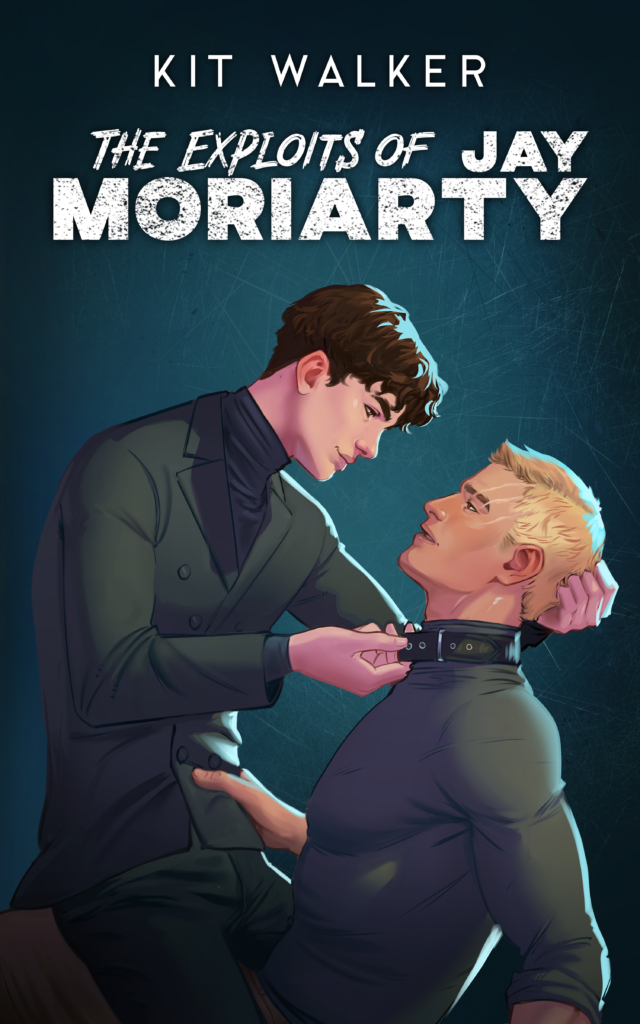
The second collected anthology of The Casefile of Jay Moriarty comes out on September 14!
This Week’s Links
Xbox’s CEO wants its games to cater to ‘more than a billion people each day’, or 24 times more than the peak population of Steam, which is delusional
Sharma wants a daily playerbase that is the equivalent of 83 World of Warcrafts at their highest peak, all logged in at the same time. Counter-Strike, the most popular game on Steam, had an all-time peak of 1.8 million. She wants 555 Counter-Strikes every day.
How Two Punk Icons Are Giving the Cramps a Second Life
Art and culture are “what you have to lose with an administration like this,” Rollins adds. “They hate science. They hate literacy. They hate women. They hate nonwhite people. They hate LGBTQ people. Those aforementioned groups, they make things that make life great. They want to eradicate it and erase it. You can do more than one thing at once. You can entertain many things. And so you can be concerned and fight the good fight, and you can also put a record on and love the Cramps.”
The Perpetual Disappointment of “If Only” Eroticism
The point is that if you put hashtag #filthykinkymonsterfucking on your promotion for a book and the actual sex scenes are identical to that of a standard human but green, a lot of readers will understandably feel like they’ve been short-changed.
If you’ve written something and your goal isn’t to get the attention of Tor Books or whoever, let me suggest that you’ll reach more people if you just post it online. You probably won’t make any money off it, but you almost certainly won’t make any money submitting it for publication.
-K
Leave a Reply