
Alyx Jones is an independent game developer from the UK. She’s been working on The Quiet Things, a deeply personal game about sexual abuse, trauma, and survival. A trailer for The Quiet Things was slated to be shown during the BAFTA Games Awards on April 17; for an independent developer, this was a huge opportunity.
Until the trailer was pulled from the show at the last minute.
Jones reports that she had already revised the trailer once because BAFTA flagged certain imagery (“an object inspection of a craft knife and a statue breaking out of a mirror”) as potentially violent. Not only is this silly on its face, it’s also incredibly weird considering how permissive game trailers usually are when it comes to violent imagery; to list just one example, the Baldur’s Gate III announcement trailer features a man vomiting his own teeth.
Nevertheless, Jones made the requested changes; she was then informed, the night before the awards ceremony, that her trailer had been pulled from the show anyway. The stated reason was that “there wasn’t enough time to put the appropriate warnings in place for the audience.”
24 hours is more than enough time to throw some white text on a black screen with a list of trigger warnings. Even a live warning from someone onstage with a microphone would take less than 10 seconds.
A responsible journalist would be hesitant to draw any hard and fast conclusions from all this, but I’m not a journalist. I’m an artist — one who’s experienced my own fair share of corporate meddling in my work. And if I were in Alyx Jones’ position, I would quite confidently believe I was being jerked around by someone who never intended to let my game see the light of day.
BAFTA has since stated that they “fully support games that engage with difficult subjects, and we made the decision in relation to our event only and with the wellbeing of all guests as our priority.” I’m not sure what the word “support” is supposed to mean in this context, considering what they put Alyx Jones through; if they’re not willing to broadcast a 2-minute trailer in support of games like The Quiet Things, what are they willing to do?
The use of words like “wellbeing” is also telling.
For the record, Jones’ trailer is incredibly tame; it features first-person game footage of the player character walking through various environments while characters in voiceover talk around the protagonist’s traumatic experiences in vague terms. The trailer only alludes to sexual assault; there’s a brief bit of VO where the main character says “stop” twice in a distraught voice.
This, apparently, is too distressing for the average BAFTA viewer — because trauma stemming from sexual abuse, especially childhood sexual abuse, is so stigmatized in polite society that we’d all rather pretend it doesn’t happen. Even the gentlest reminder that it exists is tantamount, in the eyes of some, to a psychic assault. For the sake of everyone’s mental health, victims must be silenced.
Incidentally, this exact stigma is what The Quiet Things was created to address. You can watch the trailer here.
Preorder: “Moriarty & Moran’s North Yorkshire Crime Spree”
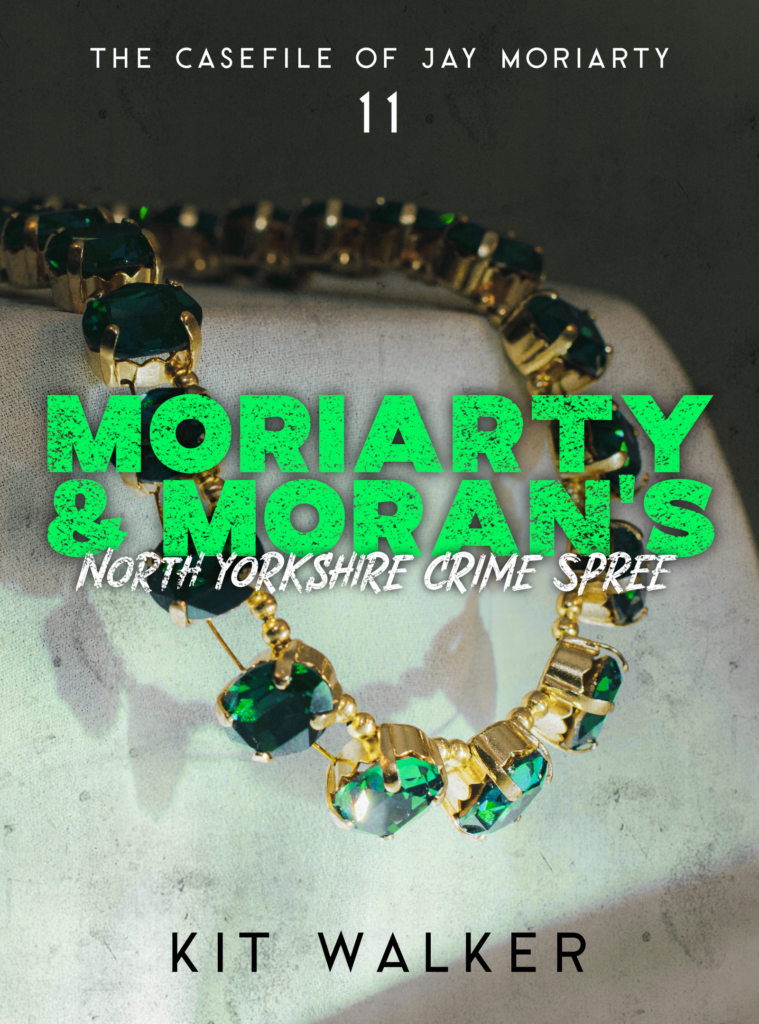
A brutal encounter with the horrors of his own past has left Sebastian Moran unmoored and exhausted — so his partner, Jay Moriarty, takes him out of London and rents a quiet cottage in Yorkshire. As Moran struggles through a storm of conflicting emotions, Moriarty is determined to help. He wants Moran to feel secure. He wants him to feel capable. So Moriarty and Moran are going to steal just about everything in the county that isn’t nailed down.
The eleventh story in The Casefile of Jay Moriarty, “Moriarty & Moran’s North Yorkshire Crime Spree,” comes out on April 27!
This Week’s Links
‘You Can’t Defeat the Robots!’: Baseball’s AI Strike Zone Is Must-Watch Television
What the first few days of ABS are showing is that this system is somehow actually highlighting the human element of the game, and adding another layer of strategy to a game that prides itself as being the thinking person’s sport.
The Rise and Fall of Misery Memoirs
Dave Pelzer’s story is real and it’s his and he can tell it however he wants. But three million copies of that story in a market that rejected everything that didn’t look like it is something different. That’s a monoculture. And a monoculture does political work regardless of whether any individual story inside it is true or false.
Britain Still Has Conversion Therapists. Here’s Why.
It is very worrying that a woman presented by British media and politics as an expert on [trans] healthcare was allowed on the BBC to rehash unchallenged the 75-year-old nonsense of a dead paedophile.
Unrelated to anything, I’ve just finished season 2 of The Wire and I need to know who is feeding Wee-Bey’s fish.
-K
Leave a Reply